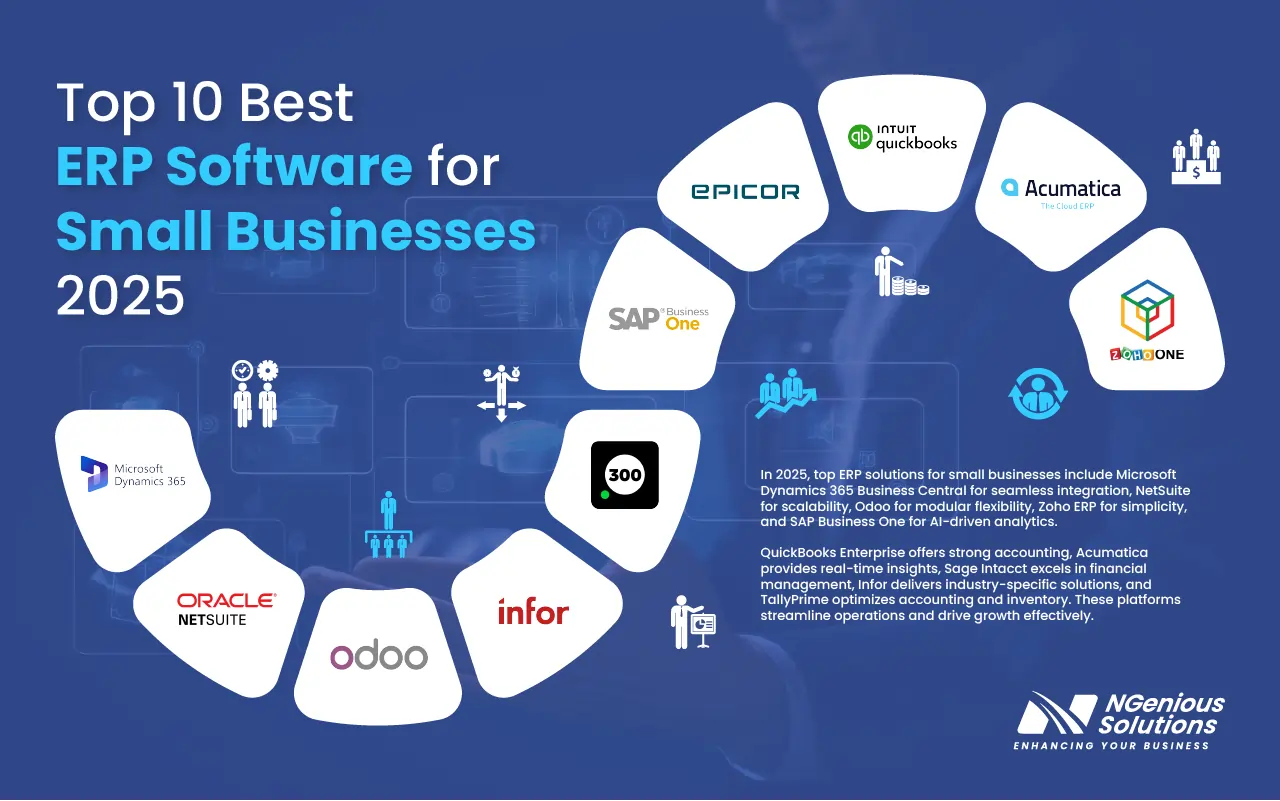
Implementing an Enterprise Resource Planning (ERP) system in 2025 requires more than just choosing the right software—it demands a well-planned strategy that aligns technology, people, and business processes. As ERP platforms become more advanced with AI, automation, and cloud-native capabilities, organizations must adapt their implementation approaches to maximize value and minimize risk. Below are the most effective ERP implementation strategies that deliver results in 2025.
1. Start With a Clear Business Case and Vision
Successful implementations begin with a strong foundation: understanding why the ERP is needed.
In 2025, companies focus on:
Defining measurable goals (e.g., reducing operational costs, improving supply chain visibility).
Identifying current pain points in workflows.
Ensuring leadership alignment across departments.
A clear vision helps maintain focus throughout the implementation and prevents unnecessary scope expansion.
2. Choose a Cloud-First or Hybrid ERP Approach
Cloud ERP continues to dominate in 2025 due to its flexibility, scalability, and lower infrastructure costs. Many businesses adopt cloud-native or hybrid ERP systems to:
Enable remote and hybrid teams.
Access real-time data from anywhere.
Simplify updates, integrations, and security management.
This approach also reduces deployment timelines compared to traditional on-premises systems.
3. Embrace AI-Driven Automation From Day One
AI and machine learning are deeply integrated in modern ERP systems. Companies implementing ERP in 2025 leverage AI for:
Automating repetitive tasks like invoicing or inventory tracking.
Generating predictive insights for demand forecasting.
Improving decision-making through real-time analytics.
Starting with AI modules early accelerates ROI and boosts operational efficiency.
4. Focus on Change Management and User Adoption
ERP failures are often caused not by technology, but by people-related challenges. Winning strategies in 2025 emphasize:
Training programs personalized to user roles.
Regular communication to explain benefits and changes.
Early involvement of key users in testing and feedback loops.
Investing in user adoption ensures the system is used effectively after go-live.
5. Use a Phased Implementation Approach
The “big bang” method is less common in 2025 as companies prefer phased rollouts that:
Reduce operational risk.
Allow teams to adapt gradually.
Provide opportunities to fix issues early.
Typical phases include financial modules first, followed by supply chain, HR, or CRM modules depending on business needs.
6. Prioritize Seamless Integration With Existing Systems
Businesses rarely replace all systems at once. Integration is critical in 2025, especially with:
CRM platforms
E-commerce systems
IoT devices
HR management tools
Industry-specific applications
APIs and cloud integration tools make this easier, but planning integration early prevents data inconsistencies later on.
7. Establish Strong Data Governance and Migration Processes
Data quality determines ERP performance. Effective strategies include:
Cleaning and standardizing data before migration.
Setting rules for data ownership and access.
Using automated tools for data validation and transfer.
In 2025, companies rely on AI-powered data cleansing tools to reduce errors and speed up the migration process.
8. Partner With Experienced ERP Consultants
Even with advanced tools, expertise is essential. Skilled consultants help organizations:
Avoid common implementation pitfalls.
Optimize processes instead of copying old workflows.
Configure the system based on industry best practices.
Many businesses in 2025 adopt a collaborative model, combining consulting support with in-house project teams.
9. Monitor, Optimize, and Continually Improve Post-Go-Live
ERP implementation doesn’t end at launch.
Top-performing companies in 2025:
Track KPIs to measure system performance.
Gather user feedback for ongoing improvements.
Implement new modules or automation features as needs grow.
Continuous improvement ensures long-term success and maximum ROI.
Conclusion
ERP implementation in 2025 is more dynamic and technology-driven than ever. By adopting a cloud-first mindset, embracing AI, ensuring strong change management, and taking a phased approach, organizations can significantly increase the success of their ERP projects. With the right strategies in place, businesses can unlock efficiency, enhance data visibility, and stay competitive in the fast-evolving digital landscape.